

At the faintest sign of a scratchy throat, a minor cough, or even when we hear that vog is settling in, I know exactly what’s about to happen.
Without saying a word, my husband Brad heads straight to the māla. A few minutes later, he’s back with fresh ʻuhaloa in hand.
Now that's my love language. Works every time.
If you aren’t already familiar with this powerful Native Hawaiian plant, there are plenty of reasons you need it in your wellness routine. Let’s dig in!

What is ʻuhaloa?
ʻUhaloa (Waltheria indica) is a Native Hawaiian plant that has been cherished in lāʻau lapaʻau (Hawaiian plant medicine) for generations. It’s a shrub that grows low to the ground, loves the sun, and thrives in the volcanic soils of Hawaiʻi.
These days, ‘uhaloa is most frequently sipped as a tea to support overall respiratory health (think asthma or heavy vog) or as a powerful remedy when you’re feeling that scratchy throat coming on.
Traditionally our kūpuna used every part of this plant, including the roots, bark, leaves, and flowers.
Tea is just the beginning. ʻUhaloa can also be simmered and inhaled as a steam, or added to a warm soak—whatever your body needs most that day.
"Brad will gather the entire plant—‘roots to the shoots’ as he says—to chew on the root bark."
What is ʻuhaloa good for?
Here at Polipoli, we sip it regularly for general wellness. And when we start to feel sick, Brad will gather the entire plant—“roots to the shoots” as he says—to chew on the root bark.
In our home, we also simmer it on the stove and breathe in the steam when we're feeling a little stuck. Other times we add it to a warm soak at the end of a long day.
If we’re feeling fancy, we’ll mix it with lemongrass for a flavor that lands somewhere between floral and citrus, like a subtle lemon drop.
ʻUhaloa is gentle enough for everyday use, and when we start to feel sick, it’s definitely our go-to.

Where to buy ʻuhaloa?
As farmers ourselves, we’ll always advocate for you to grow your own. But if that’s not possible, we've got you covered with a few options:
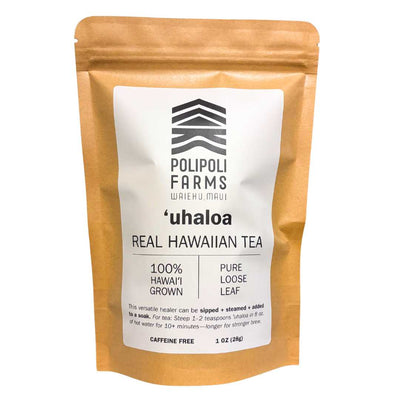
- ʻUhaloa Loose Leaf: Comes in a bulk size so you can sip it, steam it, or add it to a soak. The most flexible option if you want to explore.
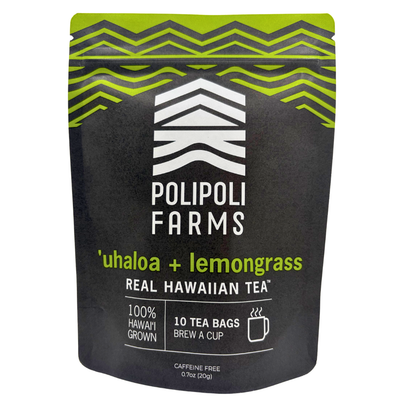
- ʻUhaloa + Lemongrass Tea Bags: The easiest everyday option. Add hot water, steep, done.
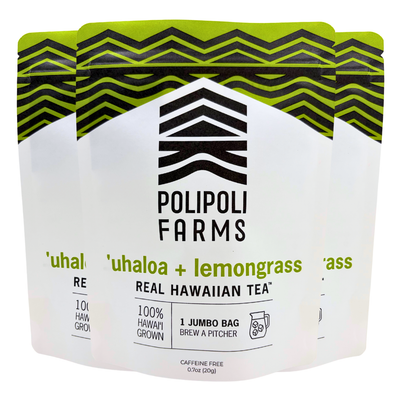
- ʻUhaloa + Lemongrass Jumbo Bags: For brewing a pitcher at a time. We keep ours in the fridge all week.
We grow ʻuhaloa right here at our family farm in Waiehu, Maui. We ship across the U.S. and offer free shipping with a minimum purchase.
ʻUhaloa can be hard to find outside of Hawaiʻi, which is why we're so honored to grow it for our community both at home and for those in the diaspora living beyond our shores.
If you plan to grow your own or source from someone else, the most important thing is to start with clean plant material that’s free from harsh chemical fertilizers and pesticides. With a plant you're steeping, steaming, and soaking in, that matters more than ever.
The Healing Plant our Kūpuna Trusted
Regeneratively grown in Maui, shipped across the U.S.
How we grow ʻuhaloa at Polipoli Farms.
Today our ʻuhaloa grows within food forests alongside other native and Polynesian plants that have sustained our ancestors for generations.
Our growing style can be described as "agroforestry" or "regenerative farming." That's all technically true. But really, we're just farming the way our Indigenous ancestors did for millennia.
We build healthy soil through composting, cover cropping, and living mulch. Instead of monocropped rows, we grow forest ecosystems packed with diversity.
As a Native Hawaiian farm business, growing these plants is one way we carry our kuleana. ʻUhaloa and the other cultural plants in our māla hold the healing knowledge and identity of our people. Tending to them means cultivating something much bigger than a farm.
When you sip ʻuhaloa from Polipoli Farms, that's the lineage you're connecting to.

What does ʻuhaloa taste like?
On its own, ʻuhaloa has a mild, floral flavor with a hint of natural sweetness. In my opinion, it’s similar to chamomile. It’s gentle enough to sip without any added sweetener and mild enough to play well with other flavors.
Our personal favorite? Blended with lemongrass. We originally made this blend for ourselves, but when our friends and ʻohana couldn’t get enough, it became a permanent part of our lineup.
The aroma alone will stop you in your tracks. It’s bright, fruity, and I love to pop open a bag and just take in a deep breath. When brewed, it tastes like a delicate lemon drop.

How to make ʻuhaloa tea?
The good news is that brewing ‘uhaloa tea is super easy and adjustable to your preference.
Here’s our recommendation: Steep 1–2 teaspoons of ʻuhaloa loose leaf in 8 oz. of boiling/hot water for 10+ minutes. The longer it steeps, the stronger the brew.
Some things to consider:
- Loose leaf or tea bags?
Well, it depends. Our ʻUhaloa Loose Leaf gives you the most flexibility. Steep it as tea, simmer it for steam, or add it to a soak. If you want to explore everything this plant has to offer, loose leaf is the way to go.
If you're looking for something convenient, pre-portioned and flavor-forward, our ʻUhaloa + Lemongrass blend is where it's at. We went through a lot of R&D to get the flavor just right. The result is delicate and floral with sweet citrus notes. It's the kind of healthy choice you'll actually crave.
- Can I reuse the leaves?
Yes! You can get a second steep out of ʻuhaloa. Some people prefer the second steep for an afternoon cup when they want something lighter.
- Hot or cold?
Oooh, that’s a hard one. It depends. We like it hot on a slow morning, chilled straight from the fridge on a warm afternoon. ʻUhaloa tastes ʻono both hot and cold and there's no wrong way to enjoy it.
That said, we recommend brewing it hot first and then chilling (versus cold steeping). That's how we get the best flavor out of it.
Still have questions? Here's what we get asked most.
Is ʻuhaloa caffeine free? Yes. ʻUhaloa is naturally caffeine free, which makes it a great option any time of day—morning, afternoon, or as a wind-down before bed.
Can kids drink ʻuhaloa tea? According to the Guide to Selected Plants of the Māla Lāʻau Lapaʻau—a resource published jointly by the University of Hawaiʻi John A. Burns School of Medicine and the Department of Native Hawaiian Health—the flowers are considered good medicine for children who are more than ten days old. As it goes, though, we always recommend checking with your personal doctor first, especially for very young children.

Where does ʻuhaloa grow? ʻUhaloa is native to Hawaiʻi and grows naturally in sunny, dry to mid-elevation areas across the islands. It's a hardy shrub that loves volcanic soil and is drought resistant.
Can I grow ʻuhaloa myself? Absolutely, we encourage it! ʻUhaloa propagates easily and doesn't need much to get going. We have a quick tutorial on how we propagate ʻuhaloa at Polipoli if you want to give it a try. Start with one plant in a sunny spot and go from there.
What's the difference between ʻuhaloa loose leaf and tea bags? Loose leaf gives you flexibility—steep it, steam it, soak in it. Tea bags are pre-portioned and convenient, perfect for everyday use.
If you're just getting started, the tea bags are the easiest entry point. If you want to explore everything ʻuhaloa has to offer, loose leaf is the way to go.
Rooted in Hawaiian healing traditions
Locally grown in Maui, shipped across the U.S.
What is lāʻau lapaʻau? Lāʻau lapaʻau is the traditional Hawaiian practice of plant medicine, working with native and Polynesian plants to heal inside and out.
This sacred practice was passed down through generations of Hawaiian knowledge keepers. ʻUhaloa is one of the most well-known plants within lāʻau lapaʻau, valued for its ability to support respiratory health and overall wellness.
ʻUhaloa has been showing up for Hawaiian ʻohana for generations. We’d love for it to show up for yours, too.

How should I store ʻuhaloa? Keep it in a cool, dry place away from direct sunlight. A pantry or cupboard works perfectly. An airtight container will keep it fresh longest. Properly stored, dried ʻuhaloa will stay fresh for years, though we doubt it'll last that long once you get into a daily rhythm with it.
Is ʻuhaloa the same as uhaloa, hiʻaloa, or Waltheria indica? Yes, these are all the same plant, just different names. ʻUhaloa and hiʻaloa are both Hawaiian names for Waltheria indica, the plant's scientific name. You may also see it spelled without the ʻokina as "uhaloa." If you're searching for it online or at a nursery, any of these names will get you there.
Let's Keep This Going
More stories from the farm, delivered every Friday.
Join us now and get FREE SHIPPING as a small mahalo.
Unsubscribe anytime, no hard feelings.