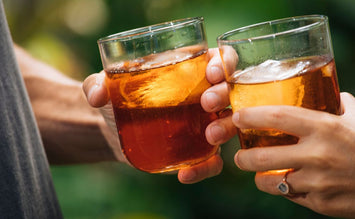

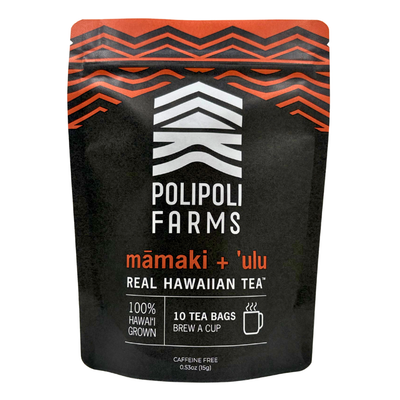
A few years back we were selling our goods at a community event when a woman picked up a package of our Māmaki and ʻUlu tea. She looked genuinely puzzled.
"What makes it Hawaiian?" she asked. "Are there pineapples?"
I paused . . . took a deep breath . . . then smiled.
It was a learning moment for both of us. I explained that our tea is made from māmaki, a plant endemic to Hawaiʻi, found nowhere else in the world. I shared that ʻulu, or breadfruit, is a canoe plant brought here intentionally by early Polynesian voyagers.
“. . . so that's what makes it Hawaiian,” I told her.
She scrunched her face, put the bag down, and walked away.
We can't win ʻem all.
But that moment stuck with me. When many people imagine Hawaiʻi, they picture pineapples. They think of those macadamia nut chocolates at the airport gift shop. And they remember those purple orchid lei placed around their necks when they arrive at the lūʻau.
I think you know where this is going . . . none of those things are originally from here.

That's not a criticism of any of them and many have become genuinely woven into the fabric of island life. But there's a difference between what's associated with Hawaiʻi and what is truly of this place.
Understanding that difference matters, especially when it comes to supporting the plants and food systems that have sustained these islands for generations.
So let's talk about five plants associated with Hawaiʻi that aren't actually Hawaiian.
1. Pineapple

Let’s start with the most iconic "Hawaiian" food of all. I partially blame the Canadian chef who invented "Hawaiian" pizza for this one. Yes, really . . . Canada.
Pineapple is native to South America. According to research archived at the University of Hawaiʻi at Mānoa Library, the earliest authenticated record of pineapples in Hawaiʻi comes from the Spanish diary of Don Francisco de Paula y Marin, who noted planting pineapples on January 21, 1813.
Commercial farming didn't take off until the early 1900s, when American business interests turned tens of thousands of acres of ʻāina into industrial pineapple plantations.
That history is fraught.
"An industry that helped overthrow our Kingdom, displace our people, and erase our food systems became the thing that defines us to the outside world. "
On January 17, 1893, the Kingdom of Hawaiʻi was illegally overthrown in a coup led by American businessmen and sugar planters backed by U.S. Marines. Sanford B. Dole was named president of the provisional government. His second cousin, James Drummond Dole, arrived two years later and built the pineapple empire that made the fruit synonymous with Hawaiʻi.
The painful irony is that an industry that helped overthrow our Kingdom, displace our people, and erase our food systems became the thing that defines us to the outside world.
The wounds from that era haven't fully healed, and many of the injustices Native Hawaiians face today are direct descendants of those choices.
No offense, pineapples. I still love your juicy, tart-sweet flavor. But you're not from here and your industrial plantation past is . . . yikes.
Get the Real Stuff
Traditional Hawaiian healing plants, Shipped across the U.S.
2. Lilikoʻi (Passion Fruit)

Lilikoʻi feels so deeply familiar. It shows up in our favorite desserts, our shave ice, and of course our unofficial state juice, POG, a mix of passion fruit, orange, and guava.
In fact, lilikoʻi is native to Brazil and was introduced to Hawaiʻi via Australia around 1880. It naturalized so well that within decades it was growing wild across all the islands.
According to the online Hawaiian dictionary Wehewehe.org, the name "lilikoʻi" itself comes from a place in East Maui, where it was first widely cultivated. So while the plant is South American, the familiar name has local origins.
3. Guava

Here’s another namesake ingredient in POG.
Pink, fragrant, and growing wild along hiking trails in Hawaiʻi, guava feels like it's always been here. But like lilikoʻi, it arrived relatively recently and has made itself very much at home.
Common guava came from Mexico and Central America in the early 1800s, followed shortly after by strawberry guava from Brazil.
Both are genuinely ʻono and deeply embedded in island food culture. But the strawberry variety has become one of the most invasive tree species in Hawaiʻi, spreading across hundreds of thousands of acres of native forest.
According to the U.S. Forest Service, it outcompetes and displaces native species and degrades watersheds across the islands. A University of Hawaiʻi study cited by the USDA found that strawberry guava forests lose 27 percent more water than native forests, directly threatening Hawaiʻi's groundwater supply.
The story of guava in Hawaiʻi is a reminder that what feels native isn't always, and that the things we love can sometimes come with consequences we're still reckoning with.
4. Macadamia Nuts

Walk through any airport gift shop and you'll find dozens of products leaning on the word "Hawaiian" to describe a nut that has never had anything to do with Hawaiian culture. Whether that's deceptive marketing or genuine ignorance, it's worth setting the record straight.
According to the Kamehameha Schools Kaʻiwakīloumoku Pacific Indigenous Institute, macadamia nuts are native to Australia and were first planted in Hawaiʻi in 1881 by a sugar plantation manager as windbreaks for his cane fields. Commercial farming didn't begin until the 1920s.
There's an important distinction here that gets lost in the marketing: something can be from Hawaiʻi without being culturally Hawaiian.
Macadamia nuts are grown in Hawaiʻi. They are not part of our cultural heritage, our traditional food systems, or our ancestral identity. That difference matters, especially when brands use "Hawaiian" as a selling point while the plants that actually sustained Native Hawaiian communities for generations remain largely unknown.
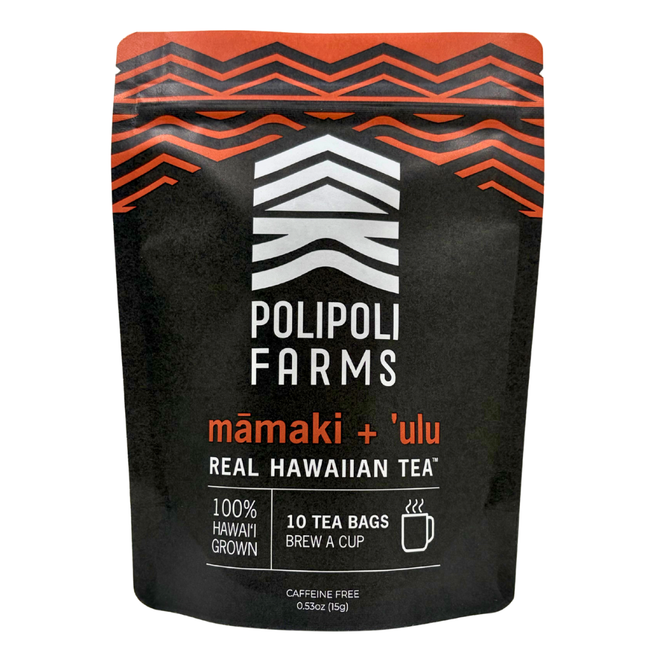
Polipoli Farms
Māmaki and ʻUlu Tea - 10 Tea Bags
$16.00
5. Purple Orchids

That gorgeous purple lei placed around your neck when you step off the plane or arrive at the lūʻau? Yep, not from here.
The vast majority of those purple orchids are imported from Thailand, where they're cheaper to grow and string.
That’s right, while lei tradition itself is deeply Hawaiian, the flowers it's made from are often traveling just as far as the tourists wearing them.
The good news is that many local lei makers can offer the real deal. Here on Maui, Haku Maui is run by our friend Brit Alejo-Fishell, a Native Hawaiian who sources local flowers through her network of island growers and specializes in traditional lei making techniques.
Brit also offers workshops if you want to learn the craft yourself. She is exactly the kind of maker worth seeking out and supporting.
So what is actually from here?
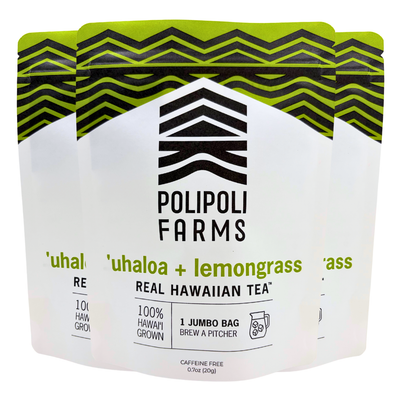
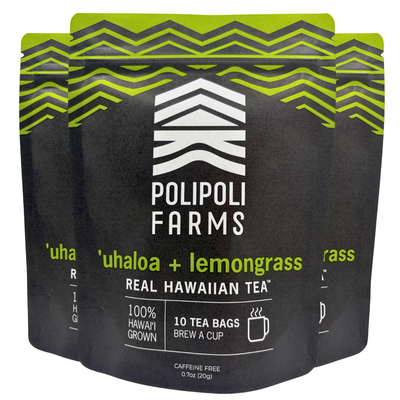
Hawaiʻi is home to an extraordinary number of plants that are endemic, meaning they’re found nowhere else on Earth. ʻŌhiʻa lehua, māmaki, ʻuhaloa, and hundreds of others evolved here over millions of years, perfectly adapted to these islands and woven into the culture, medicine, and identity of Native Hawaiians.
And then there are the canoe plants. These are species that Polynesian voyagers brought with them intentionally across thousands of miles of open ocean: kalo, ʻulu, maiʻa, kō, and others. These aren't native in the strict botanical sense, but they are Hawaiian in every cultural and historical sense. They came here as part of a deliberate act of people building a life on new land and they sustained Hawaiian civilization for over a thousand years.

At Polipoli Farms, these are the plants we grow. Not because the others aren't beautiful or delicious in their own right, but because we believe the plants that have fed and healed these islands for generations deserve to be at the center of how we farm, what we eat, and how we understand Hawaiʻi.
Lilikoʻi is incredible . . . . guava jam is ʻono . . . and I’ve had my share of chocolate-covered macadamia nuts.
But authentic Hawaiian plants like māmaki, ʻulu, and ʻuhaloa? Those just hit differently.
They carry centuries of knowledge, care, and relationship with this ʻāina. They were here before the plantations, before the overthrow, before the gift shops. And here at Polipoli Farms, we’re working to make sure they aren’t forgotten.
Ready to Taste What's Actually From Here?
100% Hawaiʻi Grown, Shipped across the U.S.
Let's Keep This Going
Most newsletters are spammy. Ours isn't.
Join now and get FREE SHIPPING as a small mahalo.
Unsubscribe anytime, no hard feelings.