
by Lexi Figueroa
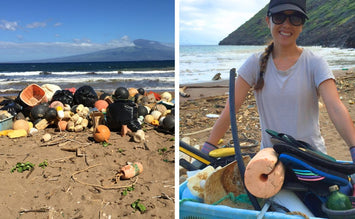
Lexi is Polipoli Farms' marketing coordinator + ʻāina crew member. She writes about her experiences to inspire budding mahiʻai and storytellers.
Lehia and I recently had the chance to sit down for a talk-story with Kealohi Naipo, a Native Hawaiian registered dietitian, where we discussed nutrition + farming from a cultural perspective.
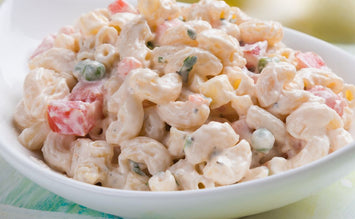
During that conversation, both of them shared that in separate moments in their lives, they had been told that “ʻUlu is unhealthy”.
You should’ve seen my face in that moment—I was totally shocked. I grew up understanding ʻUlu as one of the most nourishing starches we have in Polynesia, so hearing the opposite felt so wrong.
Kealohi explained that while some people label ʻUlu as “unhealthy” because it’s high in carbohydrates, that idea lacks context. ʻUlu is a complex carbohydrate, meaning it’s rich in fiber, it’s nutrient-dense, and supports steady energy and fullness throughout the day.
That moment really stuck with me. It made me realize how many misconceptions exist, not just about our cultural foods, but about farming, health + Hawaiʻi as a whole.
Things are always more nuanced than they seem, but these are just a few takes I stand by—beliefs you may have heard growing up that don’t quite hold up . . .

Myth: ʻUlu is Unhealthy
This is something I never expected to hear, but clearly it’s a narrative that’s out there. Like Kealohi shared, labeling ʻulu as “unhealthy” usually comes from a misunderstanding or fear of carbs without understanding the difference between simple + complex carbohydrates. ‘Ulu is so much more than just a cultural substitute for a potato.
Why I disagree: Our kūpuna (ancestors) understood that ʻUlu was + continues to be deeply nourishing. It’s high in fiber, supports digestion, and provides long-lasting energy. For generations, it has sustained our people, not just physically, but also through our cultural practices. When we strip foods down to fit Western nutrition beliefs or trends without any culturual context, we lose sight of their true value.

Myth: You need to be in shape or have prior ʻāina-work experience before becoming a farmer.
I was out at lunch with a few of my hoa papa and our kumu a few years ago. My kumu’s daughter was sharing about her work in conservation after graduating, and I told her how I’d always been interested in that kind of work but felt like I didn’t have enough experience to even consider it. I also didn’t feel like I was physically in-shape enough to do it.
She told me something that really stuck: you don’t get in shape for ʻāina work before doing it—you get in shape by doing it. There’s nothing that can fully prepare you for long days on your feet, weeding in awkward positions, and working with heavy machinery until you’re actually in it.
Why I disagree:
Now that I’ve been working on the farm, I understand exactly what she meant. Of course, taking care of your body—moving it regularly and fueling it well—helps. But no amount of preparation fully replicates the experience of actually doing the work.
If you feel like you’re not “fit enough” or unsure if you can handle it physically, I think you should still give yourself the chance to try. You might be surprised by how quickly your body adapts. You build that strength and endurance through the work itself.
"Calling Western medicine the only real option ignores what came before it."

Myth: Only Western medicine is legitimate—lāʻau lapaʻau is less effective.
This is something I’ve heard in different ways over time. Sometimes directly, sometimes through the way people talk about our healing practices as if they’re outdated or unreliable.
I actually don’t think we should be comparing the two in that way. I’m not saying we should replace Western medicine with lāʻau lapaʻau (keep going to your doctor + take your medicine). But at the same time, don’t discredit lāʻau lapaʻau before you get to know the practice.
Lāʻau lapaʻau, commonly referred to as Hawaiian healing medicine, consists of different types of Hawaiian + Polynesian plants, lomilomi (massage), and other practices that aim to get to the root of an ailment.
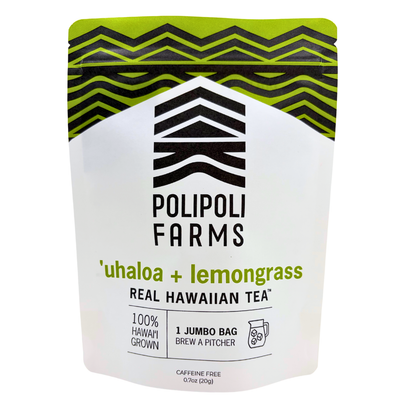
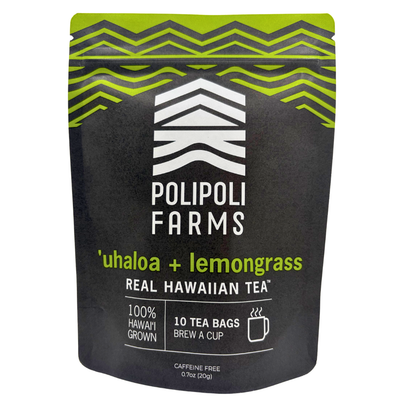
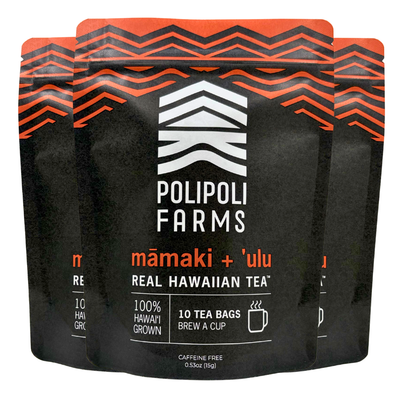
In my own personal experience, some forms of Western medicine only alleviated some of my symptoms for a short period, often not addressing the root of the sickness. But many of our plants here in Hawaiʻi, like māmaki and ʻuhaloa, do the opposite.
Why I disagree:
Calling Western medicine the only real option ignores what came before it. Lāʻau lapaʻau has supported our lāhui for generations.
Today, many people use a combination of both Western medicine + lāʻau lapaʻau, showing that they can exist side by side.
Dismissing lāʻau lapaʻau entirely not only disrespects a whole body of ancestral knowledge, but also disconnects us from practices that are deeply tied to our culture and identity.
Ingredients our Kūpuna Trusted
100% Hawaiʻi Grown, Shipped across the U.S.

Myth: Don’t grow your cultural plants. There’s no value in them.
Brad + Lehia were told this early on when they were seeking guidance on how to start their farm and decide what to grow. Other farmers encouraged them to focus on crops that were high-profit—foods + plants that were trending in markets and bringing in steady money. They were told it didn’t make sense to grow crops that weren’t visibly “selling out” in stores or at the time.
Luckily, Brad and Lehia chose to listen to their naʻau (gut).
Why I disagree:
First, we have to understand that “value” looks very different depending on the lens you’re using. From a Western perspective that prioritizes profit + cash flow, that advice might make sense. It wasn’t necessarily coming from a bad place, some farmers were likely trying to look out for them and their ability to sustain a business.
But from a Hawaiian perspective, value goes far beyond what something sells for.
Plants like māmaki, ʻuhaloa, and ʻulu carry deep cultural significance for our people. They are nutrient-dense, have been used in lāʻau lapaʻau for generations, and once sustained millions of our ancestors back in the day. That kind of value isn’t something you can measure in dollars.
Today, Brad + Lehia are full-time farmers, growing food for their community. They chose to invest in crops that feed people not just physically, but culturally. And to me, that’s where the real value lies.
If you’re someone who feels called to grow your own food or reconnect with cultural crops, don’t let profit-driven narratives be the thing that steers you away from that.

Making Space for Nuance
A lot of these myths don’t come from a place of being malicious. They often come from a lack of perspective that doesn't fully consider Hawaiian culture and history.
That’s why it’s so important we question them.
When it comes to our food, our medicine, and the work we do on ʻāina, there isn’t just one “right” way to approach these things. So much of what our kūpuna practiced was rooted in nuance. Value isn’t always something you can measure in simple terms.
Whether it’s how we view ʻulu, farming, cultural crops, or lāʻau lapaʻau, I hope this encourages you to think a little deeper and maybe even unlearn some of the things we’ve been raised to believe.
At the end of the day, this isn’t about proving one belief is better than another—it’s about making space for a more balanced, informed perspective. One that allows us to decide for ourselves what we believe and stand by.
Let's Keep This Going
Most newsletters at spammy. Ours isn't.
Join now and get FREE SHIPPING as a small mahalo.
Unsubscribe anytime, no hard feelings.