
When my husband Brad and I first started farming, experienced growers and business-types told us flat out:
"Don't grow your cultural plants. They have no value."
What they really meant was that these plants don't fit today's narrow definition of value, one that measures success only by profit and yield. Our cultural plants were seen as nostalgic at best, unprofitable at worst.
These words broke my heart a little. Something in me knew it wasn't right, even if I couldn't fully articulate why at the time. But we were inexperienced and looking for guidance, so we almost listened.
The Discovery That Changed Everything

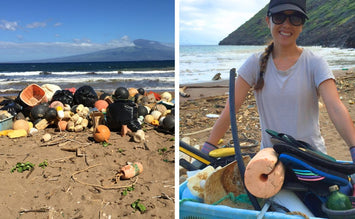
Around that same time, we began the work of clearing our ʻāina here at Polipoli. Armed with a skid steer, weed whackers, and pickaxes, we faced walls of Guinea grass and invasive trees (albizia, African tulip, koa haole) so dense we couldn't see more than a few feet ahead.
What we found underneath the brush stopped us in our tracks: terrace after terrace of loʻi kalo.
Loʻi kalo are the flooded taro paddies that formed the backbone of traditional Hawaiian food systems. Fed by ʻauwai, or hand-built irrigation channels that carried water from the streams, these terraced systems were engineering marvels, designed to grow kalo continuously while keeping the land fertile and the water clean.
For centuries, the loʻi of Nā Wai ʻEhā fed entire communities. Around the mid-1800s, this region supported over 3,000 acres of loʻi kalo, the largest system in the entire Hawaiian Islands.
How Monocropping Erased Hawaiʻi's Greatest Food System

Then came the sugar industry.
Also in the mid-1800s, industrial sugar operations swept through Hawaiʻi and systematically dismantled what generations had built. Native lands were stolen, streams were redirected, loʻi kalo were cleared, and the most productive agricultural land in Hawaiʻi was converted to sugarcane fields.
Within a few generations, one of the greatest food systems the Pacific had ever seen was largely gone.
But these terraces here at Polipoli had survived, buried under decades of invasive growth, quietly holding their shape as if they had simply been waiting for someone to come back.
"Those terraces didn't just show us what had been here before. They showed us what was possible."
I remember standing at the bottom and looking at the stacked terraces and getting chicken skin. That moment changed everything.
It was an instant jolt of inspiration, as if something inside me had been recalibrated . . . like ʻāina herself had spoken up against those doubters.
Those terraces showed us what was possible. They showed us whose footsteps we were following, and they made it impossible to keep pretending that our cultural plants had no value.

Why We Grow Native Hawaiian and Canoe Plants
From that day, Polipoli Farms took a different shape.
Soon we began growing ʻulu, māmaki, maiʻa, and other native and canoe plants. We began learning agroforestry, which we eventually came to understand is an Indigenous way of growing.
We also began to realize something deeper about value. The people who told us our cultural plants were worthless were measuring value in a narrow way.
That kind of math will never capture what a kalo plant carries. It will never account for what it means to grow ʻulu on ʻāina that your kūpuna cared for. And it will never measure the way a food forest teaches you about reciprocity and the systems that sustain life.
Today, those plants are everything. They are the heart of what we grow, what we sell, and who we are.
And those words—”Don't grow your cultural plants”—they still drive us. Because if people in our own community had forgotten the value of these plants, we knew others had too. That's exactly the work we're here to do.
What is a Canoe Plant?

When our Polynesian ancestors set out across the Pacific in their voyaging canoes, they didn't pack randomly. They brought with them the plants they knew would help them survive in new lands, aka “canoe plants.”
These were strategic choices, and things like ʻulu, kalo, and maiʻa were part of their survival kit. In other words, they had sooo much value.
When these voyagers arrived in Hawaiʻi, they found native plants already here. Together, the canoe plants they carried and the native plants they discovered became the foundation of extraordinary food systems that fed generations of people while keeping entire ecosystems healthy and abundant.
So the question isn’t whether our cultural plants have worth. The question is whether we're willing to recognize their value.
Kūpuna Approved Ingredients
100% Grown in Hawaiʻi, shipped across the U.S.
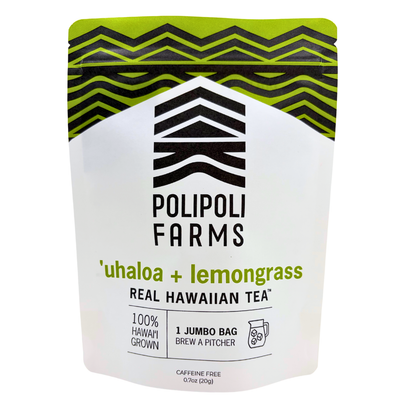
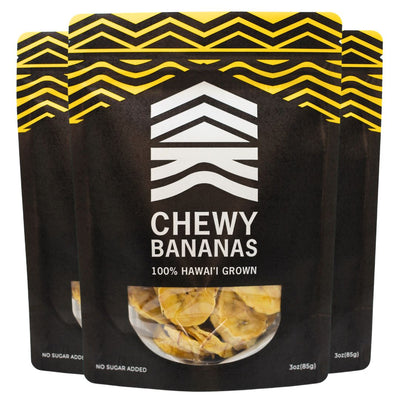
Reclaiming Indigenous Food Systems

If you've ever been told that your culture, your language, your foods, your practices are not worth building around, please remember this story.
What our kūpuna built here wasn't lost. It went quiet, covered over by invasives and industries and narratives that measured value the wrong way. But it's still here, waiting to be uncovered—sometimes literally, like in our case.
The work of reclaiming these cultural plants isn't just about farming. Our mission is about rebuilding the food systems and the mindsets that allow them to thrive again.
The good news is that work doesn't require acres of land or years of experience. It starts small, close to home, and one mindful choice at a time.
"Food systems are kept alive not just by farmers like us, but by the communities that value what we grow."
If this resonates, you’re our kinda people. Here are 3 simple (and ʻono!) ways you can join this mission:
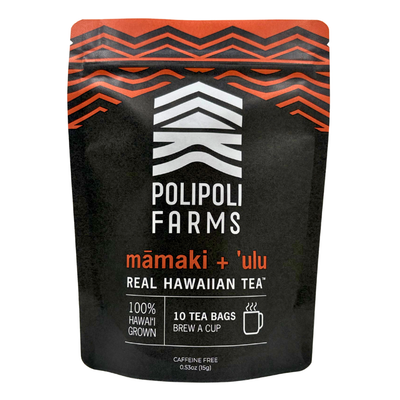
- Taste something new. Find one native or canoe plant you've never cooked with and try it. Bele at the farmers market . . . a cup of māmaki and ʻulu tea . . . side of kalo or ‘ulu instead of rice. I’m convinced that if everyone knew how ‘ono and nutritious these plants are, more people would be growing them. Speaking of which . . .
- Grow something. If you have a sunny spot and a bit of ʻāina to work with, start with one cultural plant. Kalo is a great option, ʻuhaloa is super hardy, and maiʻa, or banana, grows well in backyards. Start with one and see what happens.
Need inspiration? Read about 5 Healing Plants of Hawaiʻi to Grow at Home.
Kūpuna Approved
100% Hawaiʻi Grown, Shipped across the U.S.
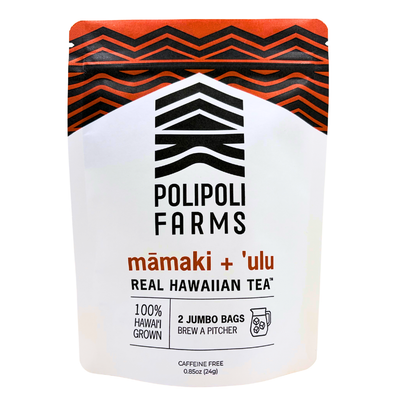
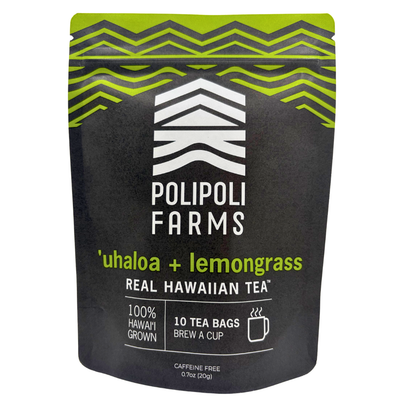
If growing isn't accessible to you right now, volunteer with a local ʻāina group. Across Hawaiʻi there are farms, loʻi restoration projects, and food forest initiatives that welcome hands.
Check out this link for ideas: Where to Volunteer on ʻĀina in Hawaiʻi
3. Talk about it. The narratives around our cultural foods matter. Teach your keiki what kalo is . . . tell your neighbors about Hawaiian healing herbs . . . share the story of the canoe plants with someone who's never heard it.
Food systems are kept alive not just by farmers like us, but by the communities that value what we grow.
Let's Keep This Going
Most newsletters are spammy. Ours isn't.
Join now and get FREE SHIPPING as a small mahalo.
Unsubscribe anytime, no hard feelings.